home


    Page 1

    Page 2

    Page 3

    Back to 'tech. help'


    The sense and non sense of Emission testers continued (Diesel)

    This article aims to dispell some of the myths that seem to be around emission testers.


    Article No. 56 Page 1/3
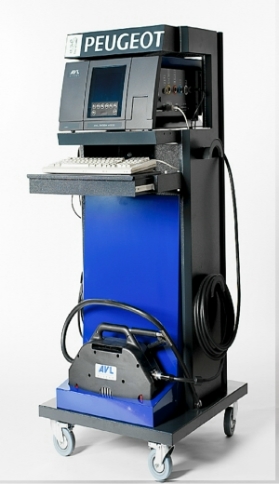
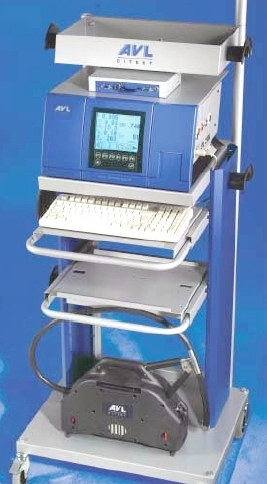
    AVL 4000 PEUGEOT OEM testerclick for AVL 4000 emission tester info


    Diesel emissions need to be measured in a different manner than petrol emissions to get meaningful and accurate results.

    On Petrol vehicles the actual gas values are important, the CO2, the CO, the HC and O2 values. These values are important for diagnostic and quality check purposes.

    On Diesel vehilces the actual gas values are of a lesser importance. On a Diesel vehicle the opacity is measured. The opacity of the emissions is an indicator of the engine's quality and ability to combust the fuel efficiently.

    The measurement method of the emission's opacity is done with visible light absorbtion, somewhat similar to the petrol emissions in an Infra red light test bench.

    The actual Diesel emission tester is very different to the petrol emission tester, following is a simplified explanation of the Diesel emission testing equipment currently on the market and approved in many countries around the world.


    AVL drawing opacity measure chamber set up.

    Simple explanation

    A petrol emission tester has a pump to draw exhaust gases into the infra red measurement chamber. The Diesel tester has no such pump, due to course nature of the particulates in the Diesel emissions.
    The Diesel exhaust gasses are pushed into the measurement chamber by velocity.
    The fumes are drawn out of the opacity chamber by clean air flowing past the chamber's outlets. The clean air is drawn into the tester by a small fan placed near the top of the machine. The moving air is also to provide the lenses in the machine with a protection buffer of clean air (curtain air) as else the lenses soon get coated with emission deposits. The coated lenses will cause measurement error's.

    The emissions flowing into the measurement chamber contain particles. The particles absorb and scatter light. The calibrated light source will put out a known amount of light. The detector will receive a lesser amount of light when Diesel particles absorb that light.
    The lesser value of light is transormed into an opacity value.

    The first opacity tester of this kind was developed by Hartridge. The measurements and some of the values still stem from that invention, eventhough the testers have changed.

    Hartridge

    The Hartridge tester had a measurement tube of 430mm long. The opacity was expressed in a percentage of light received at the end of the tube. The lower the percentage of light received the higher the opacity.


    The length of the tube has naturally an effect on the amount of light received on the end of the tube.
    Envisage this: thake the smoke from a cigarette, which is dust particles mixed with air, you can see through a small cloud of a certain density. Now put several of those clouds besides eachother and it suddenly becomes harder to see through the smoke (with other words the sample chamber length becomes longer).
    This meant that from each tester with a measurement chamber length of anything other than the 430 mm the opacity values displayed where different while the smoke density was the same.


    K Value ...

    Continued..


    Back to 'tech. help'


    Back to 'Welcome'